Math teacher Ramina Isaac draws upon her own immigrant experience to impact lives of students

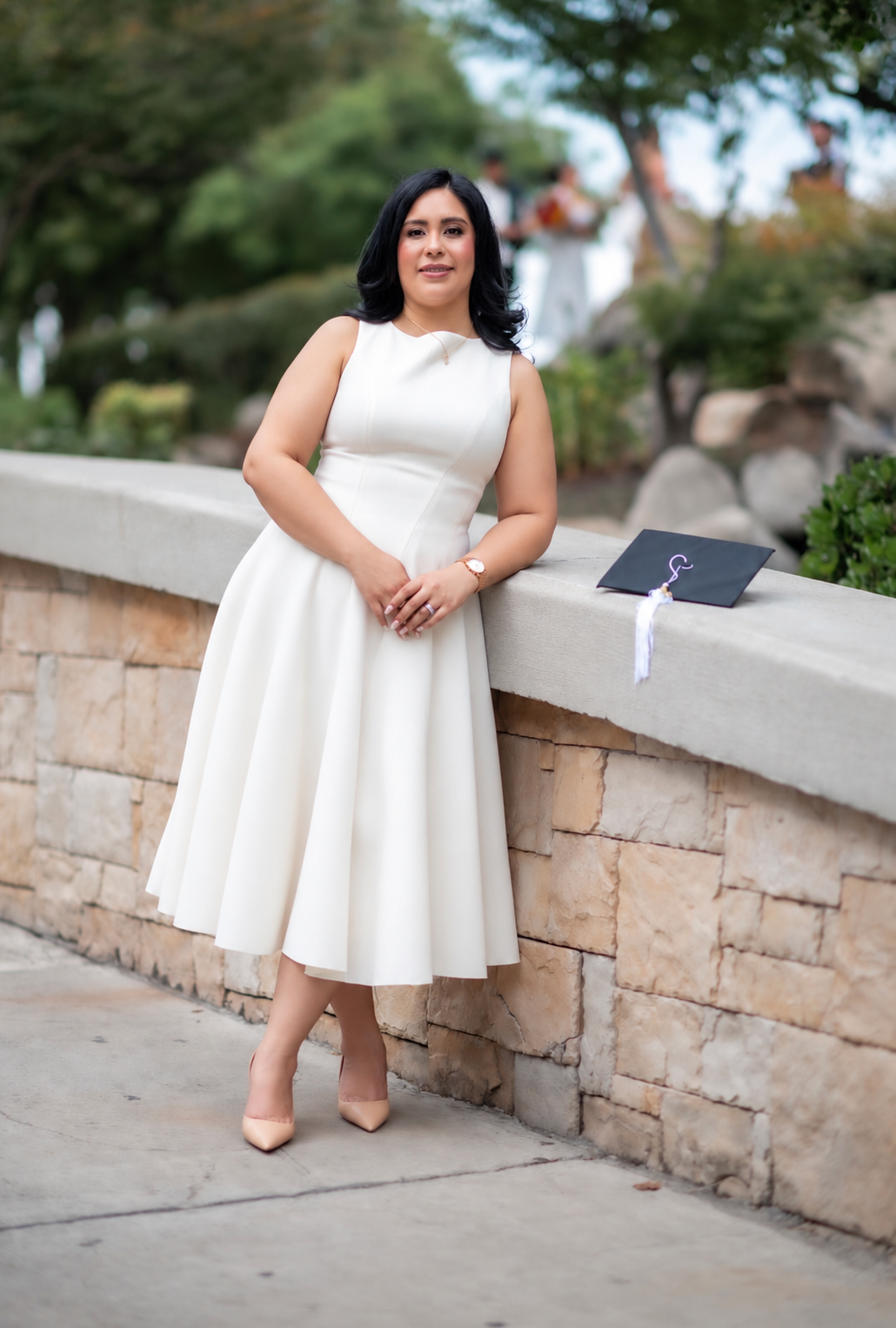
Ramina Isaac immigrated to the U.S. from Iran when she was just a teenager.

“It was very difficult,” said Isaac, who was born Tehran, the Iranian capital. “It was definitely a culture shock.”

She settled with her family in Chicago – hardly knowing a single word of English – and moved to the Central Valley just in time to start eighth grade at Somerset Middle School in Modesto.

“Six months later, I was a semifinalist in a speech competition,” said Isaac, who will teach eighth-grade math and Math 1 at DUSD during the 2026-27 school year. 

Isaac believes her immigrant story gives her a unique foundation to assist Denair Unified School District’s diverse student body.

Here are a few other things you might not know about Isaac.

Family members: Husband Lenard Isaac, children Danielle, Andrew, and Matthew, dog Milo and cat Whiskey.

Educational background: A bachelor’s degree in marketing – with a minor in computer information systems – and a master’s degree in secondary education from California State University, Stanislaus.

Previous teaching jobs: Six years at Dos Palos High School, two years at Whitmore Charter Middle School, two years at Salida Middle School, five years at Aspire Vanguard College Preparatory.

What attracted you to Denair? The opportunity to make a difference in student lives. Also,

I live in Turlock, so Denair is close to my home. My brother-in-law was a groundskeeper a long time ago at DUSD. He passed away about 20 years ago; I am honored to walk in his footsteps.

What most inspires you about teaching? The opportunity to make a lasting impact on someone’s life. Helping people understand a difficult concept, build confidence in their abilities, and discover their potential is incredibly rewarding. I enjoy creating an environment where students feel encouraged to ask questions, think critically, and continue learning. Knowing that even a small lesson or moment of encouragement can influence someone’s future is what makes teaching so meaningful to me.

What is a challenge you look forward to tackling this year?  Finding new ways to engage every student and meet them where they are academically and personally. Every class is unique, and I enjoy adapting my teaching strategies to help students stay motivated, build confidence, and reach their full potential. I also look forward to continuing to grow as an educator by learning new instructional techniques and creating a classroom environment where every student feels supported, challenged, and excited to learn. 

What is a favorite teaching tool or activity? Student-to-student collaboration. It takes the weight off of me by having the students work on the math problems at hand through collaboration.

What do you want your students to remember? More than any single lesson, I want my students to remember how they felt in my classroom. I want them to remember that they were respected, encouraged, and capable of achieving more than they thought possible. I hope they leave with confidence in themselves, a curiosity to keep learning, and the understanding that mistakes are a natural part of growth. If my students remember that they had a teacher who believed in them and inspired them to do their best, I will consider that a success.

What can parents do to support you? Maintain open communication and partner with me in their child’s education. Encouraging consistent attendance, reinforcing the importance of completing assignments, and showing interest in what their child is learning can make a significant difference. I also appreciate when parents share any concerns or important information early so we can work together to help their child succeed. When teachers and families collaborate, students are more confident, engaged, and successful.

What’s something that would surprise people about your job? I think many people would be surprised by how much happens outside the classroom. Teaching involves much more than delivering lessons; it includes planning engaging activities, grading assignments, communicating with families, analyzing student progress, and continually adapting instruction to meet the needs of every learner. It’s a job that requires creativity, patience, flexibility, and a genuine commitment to helping students succeed both academically and personally.

What do you do for fun? Latin and country line dancing. I teach adults how to dance, as well.

A little-known fact about me is … I am fluent in three languages, one of which is a 6,700-year-old language known as Aramaic.

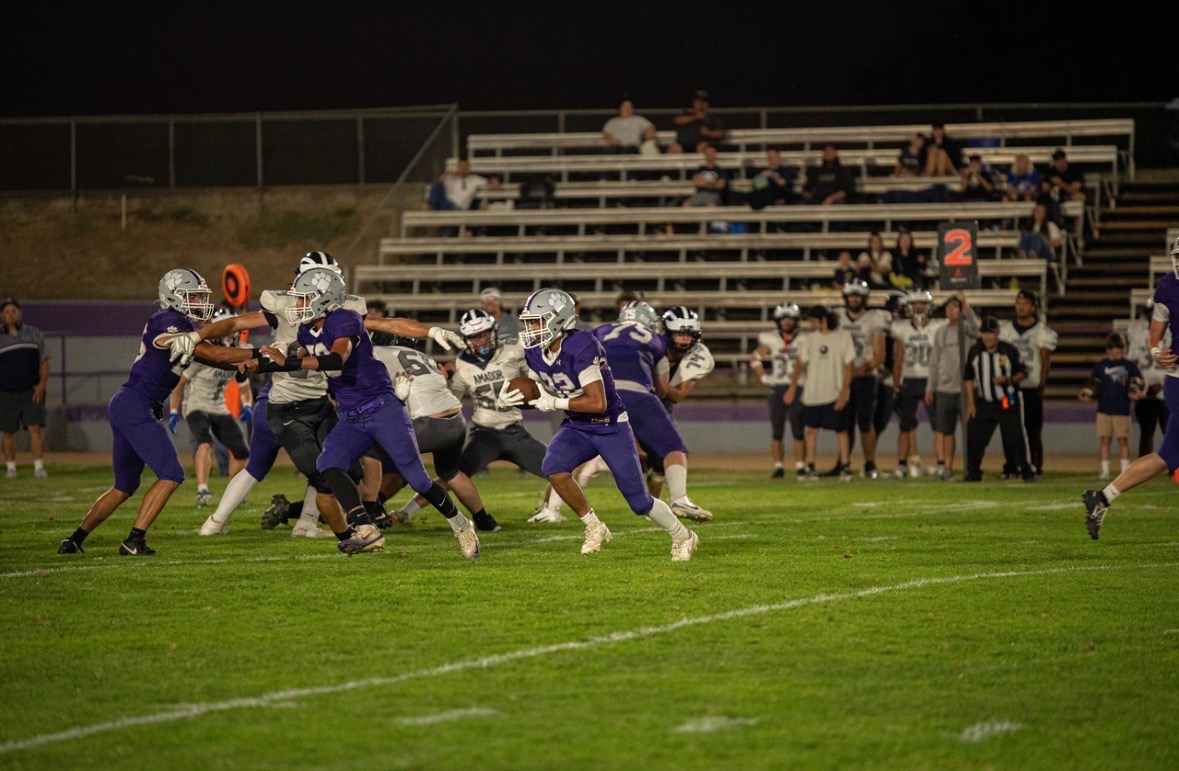
Denair High quartet take the field for North squad in third annual Merced County all-star matchup

Central Valley Sky Calendar – June 2026


Planet Parade: 

Venus is the brightest object in the night sky this month. Looking west, just after sunset, make a fist and hold it at arm’s length. Venus will be about two fist-widths (20 degrees) above the horizon.
Jupiter starts the month southeast (above and to the left) of Venus and is the second brightest object in the night sky. Take time to observe the motion of these “wandering stars” throughout the month as Jupiter moves closer to the horizon and passes within one degree (about the width of your pinky) of Venus on June 9th
Mercury can be found if you look closely, just above the horizon, about two fists north (to the right) of Venus. Binoculars may help you pick it out of the evening twilight. On the 16th, look for the sliver of a waxing crescent moon about halfway between Mercury and Jupiter.
Saturn and Mars join the parade in the morning sky this month. Look to the east, just before sunrise, and Saturn will be about three fists above the horizon with Mars, the brighter of the two, just above the horizon.
Constellations and Celestial Highlights:
Facing North, you will find the Big Dipper has rotated to the west and looks like it is hanging on a hook in a cosmic kitchen. The two stars on the outer edge of the bowl are nearly horizontal and point to Polaris, the North Star. Follow the arc of the three stars in the Big Dipper’s handle and “arc” over to the red giant star Arcturus in the constellation Boötes. 
Test your vision with the Mizar/Alcor star system. Look closely at the middle star of the Big Dipper’s handle.  Can you see two stars?  If so, congratulations, you have 20/20 vision!
By mid-month, the “Summer Triangle” asterism makes its appearance low in the northeast after 9:30pm. Look for three bright stars: blue-white Vega (in the constellation Lyra), blue super-giant Deneb (in the constellation Cygnus) and blue-white Altair (in the constellation Aquila). Do you see the triangle?  Using binoculars, compare the brightness and color of these with the red giant, Arcturus. 
For a challenge, get away from city lights and, using binoculars, try to find the Hercules star cluster (M13). Look along the western edge of the trapezoid-shaped “keystone” that makes up the core of Hercules, about two fist widths from Vega, toward Arcturus. What looks like a fuzz ball is actually a globular cluster consisting of hundreds of thousands of stars!
Did you know?
June’s full moon is called the Strawberry Moon. The name originates from Native American traditions to mark the season when wild strawberries and other fruit ripen.
Summer solstice, the longest day of the year in the northern hemisphere, occurs on Father’s Day, June 21.
Tech Talk:
Asterism: A pattern of stars that forms a recognizable shape. They can be part of a single constellation or made up of stars from multiple constellations. Examples include the Big Dipper and the Summer Triangle. Can you make your own asterisms?
Local Outreach Events: 
Friday, June 5, 7-10 pm: Great Valley Museum Science Night, MJC West Campus, featuring a natural history museum, hands-on exhibits, planetarium shows and rooftop observatory (https://www.mjc.edu/gvm/index.html). 
For Open Sky Outreach, Star Tours and Telescope Talks, email openskyoutreach@gmail.com.

By Jim Brugger and Fred Yerzy, Open Sky Outreach

Spring iReady assessments of DUSD students
show improvements over fall semester

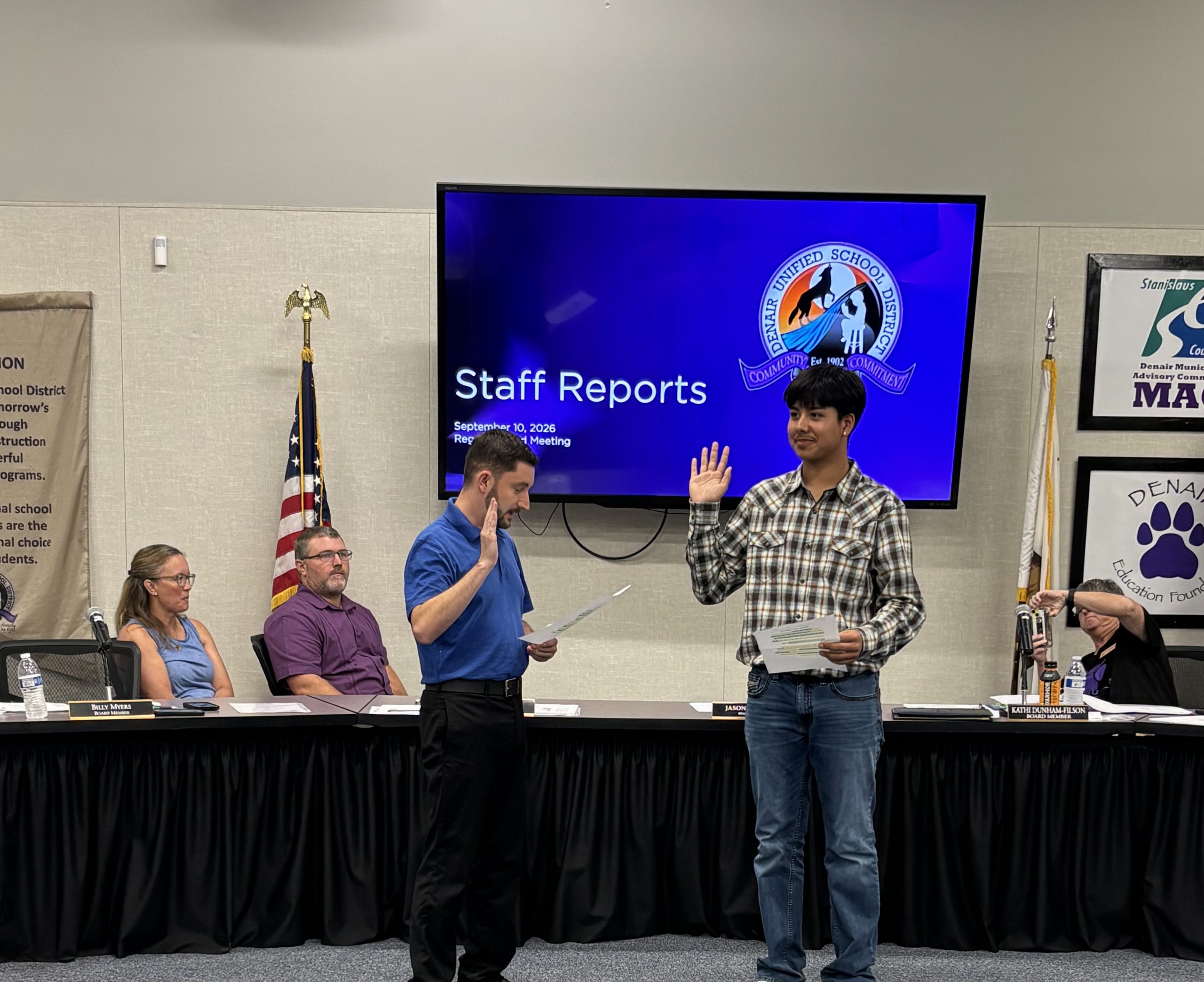
With the 2025-26 school year having just come to a close, the Denair Unified School District Board of Trustees on Thursday heard from district principals about improvements in math and reading test scores from the fall semester to the spring semester.

Principals Crystal Sousa, Ed.D. (Denair Elementary Charter Academy), Jamie Pecot (Denair Charter Academy), Gabriela Sarmiento (Denair Middle School), and Breanne Aguiar (Denair High School) took turns presenting the board with data gleaned from the iReady assessment tests.

iReady is an online assessment and skills practice platform used districtwide. Students take a diagnostic test three times per year, and teachers use the information to determine what interventions will help students improve their progress toward grade level standard (or extend their learning if they are already at/above standard). This cycle of assessment and practice provides targeted support and allows teachers to regularly monitor student progress.

DECA test results showed that students who were two or more grade levels behind in reading decreased from 45 to 26 percent, while the number of students scoring at or above proficient in reading increased from 16 to 33 percent. On the math side, the number of students two or more grade levels behind in math decreased from 48 to 23 percent, with the number of students scoring at or above proficient increased from 5 to 21 percent.

According to Sousa, a large group of students – 55 percent in math and 42 percent in reading – are just below grade level and within reach of proficiency, which could result in a significant shifting of the numbers moving forward.

Data showed a similar picture at DCA, where the number of students who scored two or more grade levels behind in reading went from 52 to 40 percent by the end of the school year, while students who scored mid or above grade level in math went from 7 to 18 percent.

Figures for DMS students show the percentage of students that scored at or above grade level in reading increased considerably from 20 to 34 percent, while the percentage 

that scored at or above grade level in math increased significantly from 11 to 24 percent.

At Denair High, among freshmen and sophomores, there was a 12 percent reduction in students scoring three or more grade levels below in math, and a 12 percent improvement in students meeting early on or above/at grade level progress. That demonstrates the most substantial improvement for DHS over the past three years of implementation, according to Aguiar. On the reading side, 6 percent of students met progress goals (early on or above/at grade level) – a reduction in the number of students scoring one or more grade levels below.

Overall, every group of students made progress at all schools. Principals attributed the growth to a better understanding about how to use the platform and the results of the diagnostic, and staff creativity in rewarding students’ effort and growth.  

The trustees also heard details on the proposed 2026-27 DUSD budget, as well as the Local Control and Accountability Plan. The district and charter LCAPs provide a roadmap for goals, actions for improving student outcomes, and spending related to those actions. The LCAPs and budget will be back before the board for approval at the special June 11 meeting.

The Board heard an annual report on mental health services in the district. Clinician Lina Maria Mateus shared that the mental health team, which includes school counselors, a student assistance specialist, and Mateus, served 813 students this school year. About 270 of those students were referred because they were disengaged from school or for academic concerns. Another 200 were referred due to family/home issues. Students who experience suicidal ideation and self-harm remain a concern, and the team is required to respond collaboratively with parents and administrators. Two highlighted successes were the annual Reasons for Living ice cream social, where 462 students placed their reasons for living on a tree mural, and recognition of the 14 field trips that provided students with wellness leadership, educational, and enrichment opportunities.

Members of Denair High School’s Class of 2026
receive their diplomas and flip those tassels

The sun has set on the Class of 2026’s time at Denair High School.

Quite literally.

Just as the final diploma was handed out last Friday, and as Principal Breanne Aguiar officially introduced the graduating class for the first time, the warm Central Valley sun dipped below the horizon with a golden flourish.

“I don’t know how I did it,” said Aguiar, when asked how she timed the festivities to conclude just as the sun was setting. “It wasn’t planned; that’s for sure.”

What was planned, however, was a crisp, 70-minute ceremony that started precisely at 7 p.m. with the playing of “Pomp and Circumstance” and the entrance of the school’s 66 graduates, resplendent in purple caps and gowns.

Speeches by Aguiar, Superintendent Terry Metzger, Ed.D., valedictorian Emma Sarmiento, salutatorian Brayden Hart, ASB president McKinley Binkley, and senior class president Allison Cherry highlighted the event. And even though graduation ceremonies everywhere have a similar structure, Metzger believes they have unique qualities, too.

“Every single ceremony has its own rhythm, its own flair, its own flavor,” the superintendent said. “It’s hard to describe. Sometimes it’s in the audience and the families cheering for their kids; sometimes it’s in the speeches and who was chosen to give them. But the similarity and the consistency is that these kids love each other. They’ve grown up together and they’ve become a family.”

Aguiar echoed those sentiments.

“Each class brings its unique character,” she said. “And this class, specifically, was special for me because it was the first that I led for all four years. This class will hold a special place in my heart because of that.”

Sarmiento, who plans on attending UC Merced in the fall, delivered a stirring 10-minute bilingual address.

“I had written my speech, made a few edits, and was really proud with what I came up with,” said the valedictorian, who graduated with a 4.35 GPA and plans on majoring in human biology. “I’m just really excited to have this tassel on the other side of my cap.”

During her address, Sarmiento told her classmates, “Over the past four years, I have quietly observed the growth of each of us. Not just in our academic or athletic achievements, but in something that will carry us far beyond high school: I saw us grow in character.”

Members of the Class of 2026 will soon strike out on new journeys, looking to make an impact in places near and far.

“We talk a lot about making an impact on the world,” Binkley told her classmates. “Big dreams, big goals, big futures. But I’ve been thinking: what if the most important impact we make isn’t someday, somewhere far away, but right here in the everyday moments we’ve already lived? The truth is, every single one of us has changed someone else’s life just by being a part of it.”

In addition to the speakers, Cloey Ellerd and Valente Rosales led the Pledge of Allegiance, Zara Devales sang the national anthem, and Dakota Shaw and Chace Butler recognized the scholarship benefactors, who contributed some $73,000 to further DHS students’ education.